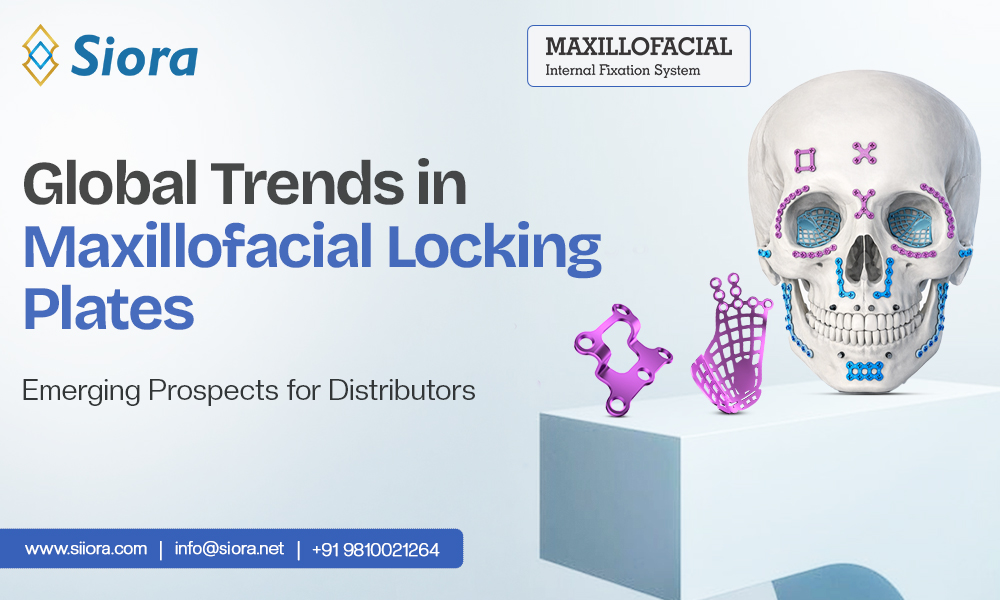
The field of maxillofacial surgery has undergone remarkable advancements over the last decade. With increasing cases of facial trauma, congenital deformities, and reconstructive procedures, the demand for reliable fixation systems has expanded significantly. Among these innovations, maxillofacial locking plates have emerged as a preferred choice for surgeons due to their enhanced stability and improved clinical outcomes.
As healthcare systems continue to modernize across developed and emerging economies, distributors dealing in maxillofacial implants are witnessing new opportunities. Understanding the latest global trends can help distributors identify promising markets and strengthen their competitive position.
Rising Incidence of Facial Trauma Driving Demand
Road traffic accidents, sports injuries, industrial mishaps, and interpersonal violence remain major contributors to facial fractures worldwide. According to healthcare reports, facial trauma cases continue to rise, particularly in densely populated urban regions.
This increasing patient pool has directly influenced the demand for advanced fixation systems. Surgeons increasingly prefer locking plate technology because it provides rigid fixation while minimizing the risk of implant loosening. As a result, distributors are experiencing steady demand from trauma centers, specialty hospitals, and maxillofacial clinics.
Shift Toward Titanium-Based Locking Systems
Material innovation is shaping the future of maxillofacial surgery. Titanium remains the material of choice for manufacturing locking CMF plates due to its excellent biocompatibility, corrosion resistance, and favorable strength-to-weight ratio.
Healthcare professionals are increasingly seeking lightweight yet durable implant systems that support faster healing and reduce postoperative complications. This preference has encouraged manufacturers to expand their titanium product portfolios, creating attractive opportunities for distributors to supply premium implant solutions across international markets.
Expansion of Reconstructive and Cosmetic Procedures
Beyond trauma management, maxillofacial locking plates are widely used in reconstructive surgeries involving congenital anomalies, tumor resections, and corrective jaw procedures. Additionally, growing awareness regarding facial aesthetics has contributed to a rise in orthognathic and cosmetic surgeries.
Countries in the Asia-Pacific, the Middle East, and Latin America are witnessing rapid growth in elective facial procedures. For distributors, this trend opens doors to diversifying customer segments and catering to specialized surgical centers performing advanced facial reconstruction.
Emerging Markets Offer Strong Growth Potential
Developing nations are investing heavily in healthcare infrastructure, surgical training, and advanced medical technologies. Improved access to specialized healthcare facilities has accelerated the adoption of sophisticated maxillofacial implant systems.
Regions such as Southeast Asia, Africa, and parts of South America represent high-growth markets for distributors. Establishing partnerships with local hospitals, healthcare providers, and medical institutions in these regions can help distributors expand their reach and generate long-term business opportunities.
Increasing Preference for Comprehensive Implant Portfolios
Healthcare providers now prefer sourcing complete maxillofacial solutions from a single supplier. Surgeons often seek a broad product range that includes mini plates, reconstruction plates, mesh systems, screws, and specialized locking instruments.
Distributors offering comprehensive product portfolios are better positioned to build lasting relationships with healthcare facilities. Providing a wide selection also enables distributors to address diverse surgical requirements while improving customer satisfaction.
Conclusion
The global locking maxillofacial plate market continues to evolve, driven by technological advancements, increasing trauma cases, and expanding reconstructive procedures. For distributors, these trends present significant growth opportunities across both established and emerging markets.
Success in this competitive landscape will depend on offering high-quality orthopedic implants, maintaining efficient distribution networks, and adapting to changing clinical requirements. Distributors who align their strategies with evolving market dynamics are well-positioned to capitalize on the growing demand for advanced maxillofacial fixation systems.
 Siora Surgicals Pvt. Ltd.